Heads up: Some of the links in this article are affiliate links. That means we may earn a small commission if you make a purchase through them, at no additional cost to you. We only recommend products, services, and experiences that we personally use, trust, or believe will add value to your trip. Thanks for supporting our work and helping us continue creating free travel guides like this one.
If there’s one thing we think everyone should experience in California, it’s standing next to a Giant Sequoia Tree. These things are absolutely massive, and photos really don’t do them justice. Fortunately, you don’t have to look too hard to find them, with several incredible groves scattered throughout the Sierra Nevada. From the famous groves in Sequoia, Kings Canyon, and Yosemite National Parks to the towering trees at Calaveras Big Trees State Park, there are plenty of places to experience these giants up close. In this guide, we’re sharing our favorite places to see Giant Sequoia Trees, along with a couple of lesser-known alternatives worth checking out.
- WHERE ARE GIANT SEQUOIA TREES?
- SEQUOIA TREES VS REDWOODS
- HOW OLD ARE SEQUOIA TREES?
- BEST PLACES TO SEE GIANT SEQUOIA TREES IN CALIFORNIA
- WHICH GROVE OF GIANT SEQUOIA TREES SHOULD YOU VISIT?
- IF YOU WANT THE MOST ICONIC GIANT SEQUOIA EXPERIENCE:
- IF YOU WANT AN EASY, ACCESSIBLE PLACE TO SEE GIANT SEQUOIAS:
- IF YOU’RE VISITING YOSEMITE NATIONAL PARK:
- IF YOU’RE EXPLORING THE NORTHERN SIERRA NEVADA:
- IF YOU WANT A QUIETER GIANT SEQUOIA EXPERIENCE:
- IF YOU’RE ROAD TRIPPING THROUGH THE SOUTHERN SIERRA NEVADA:
- IF YOU WANT TO EXPLORE MORE THAN JUST THE MAIN TRAILS:
- BEST PLACES TO SEE GIANT SEQUOIA TREES IN CALIFORNIA
- CALIFORNIA BUCKET LIST MAP & GUIDE
WHERE ARE GIANT SEQUOIA TREES?
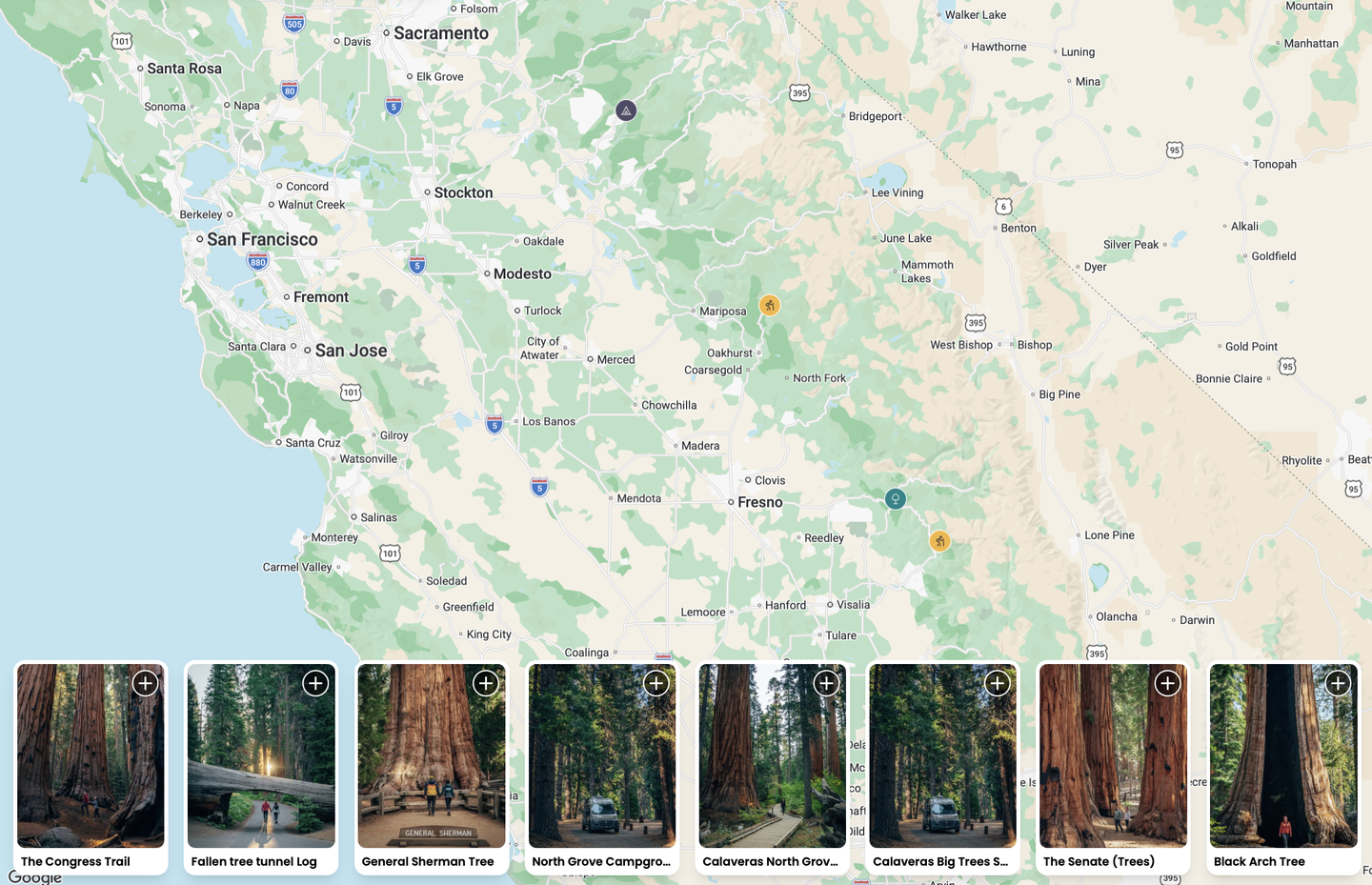
Giant Sequoia Trees are native to California’s Sierra Nevada mountains, where they grow in scattered groves along the western slopes of the range. Their natural habitat stretches roughly 260 miles from north to south, generally between 4,600 and 7,100 feet in elevation. These mountain forests provide the seasonal conditions giant sequoias need to thrive, including snowy winters and warm, dry summers.
SEQUOIA TREES VS REDWOODS
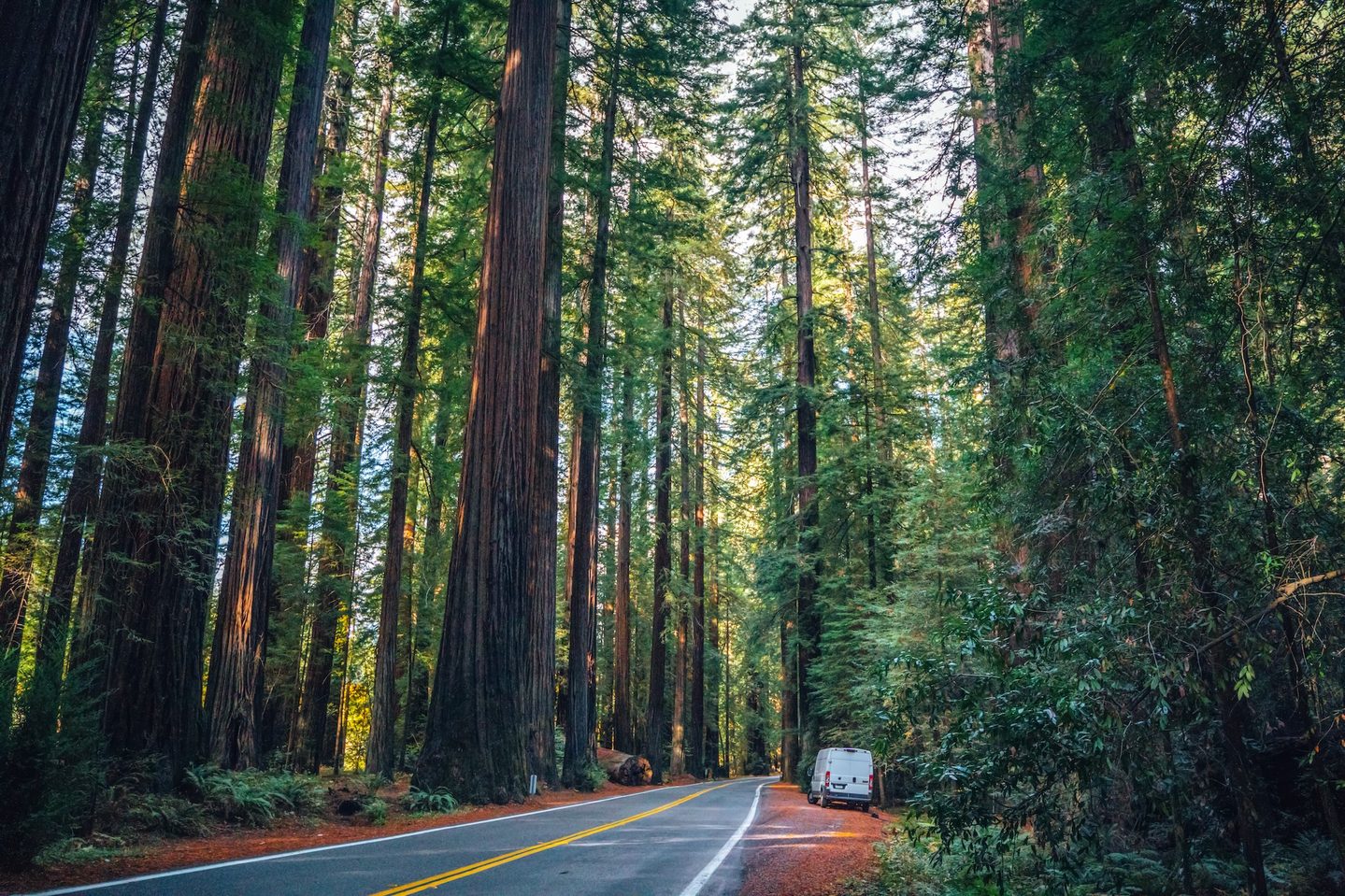
Although they’re often confused, Giant Sequoias and Coast Redwoods are two different types of trees. Both are native to California and are among the largest trees in the world, but there are some pretty significant differences. Giant Sequoias are generally much wider and larger by volume, with massive trunks that can reach more than 30 feet in diameter. Coast Redwoods, on the other hand, are the tallest trees on Earth, with some reaching heights of more than 350 feet. They also grow in very different environments. Giant Sequoias are found in scattered groves along the western slopes of the Sierra Nevada mountains, while Coast Redwoods grow along a narrow stretch of California’s coastline, where cool temperatures and coastal fog provide the moisture they need.
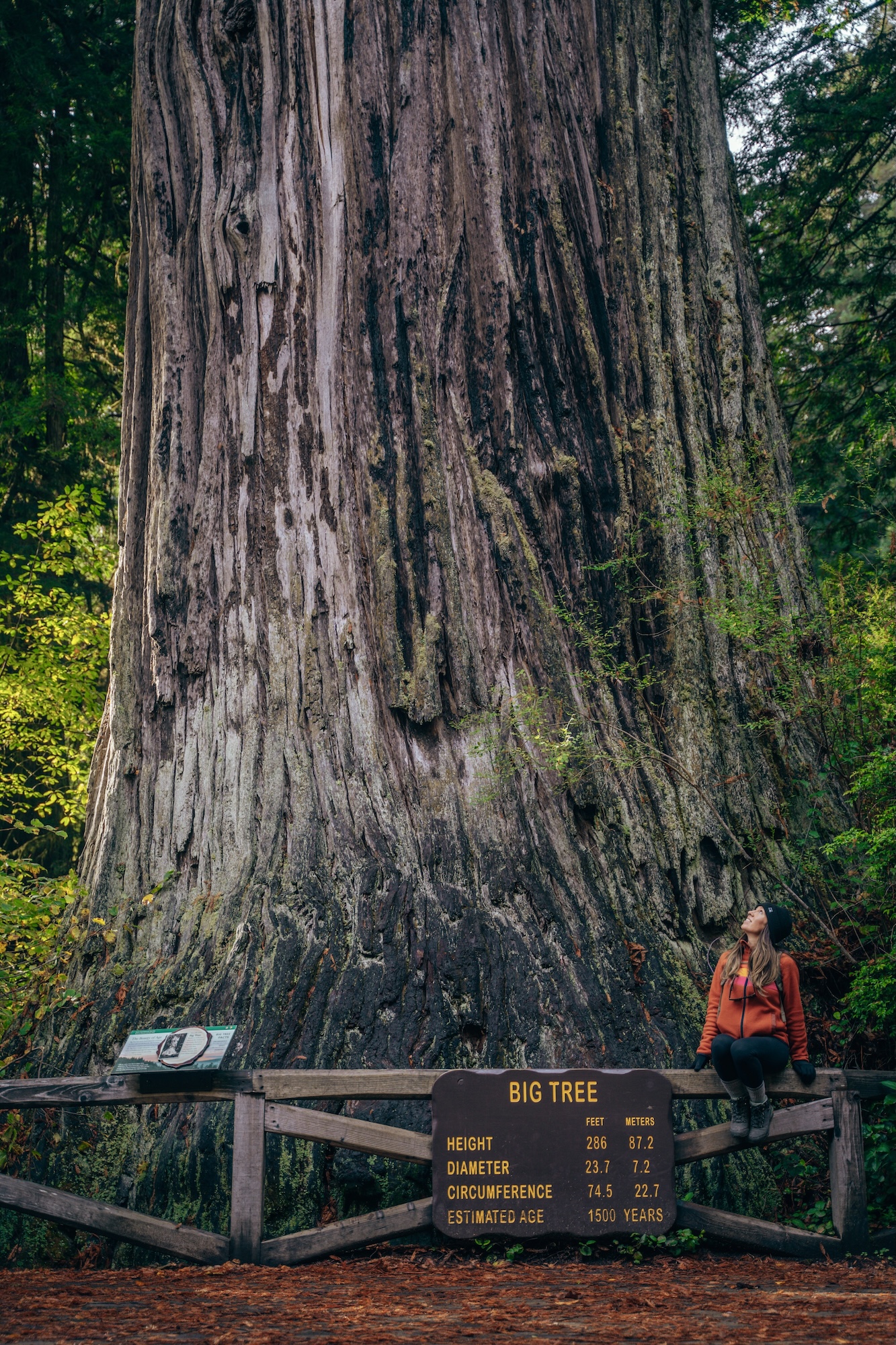
So, if you’re hoping to see the tallest trees in the world, head for the redwood forests and check out our WHERE TO SEE THE BEST REDWOOD FORESTS OF CALIFORNIA article. But if you want to stand next to some of the largest trees by volume, giant sequoias are what you’re looking for!
HOW OLD ARE SEQUOIA TREES?
Giant Sequoias are among the largest and oldest living trees on Earth. Their incredible size comes from a combination of genetics, a long growing season, and an ability to survive conditions that would damage many other trees. Their thick, fibrous bark helps protect them from fire, while their shallow root systems spread wide to support their enormous trunks. Even more impressive, these trees can live for more than 3,000 years. That means some giant sequoias were already growing before the Great Pyramid of Giza was built, giving you a pretty incredible perspective on just how long these trees have been standing.
BEST TIME TO VISIT GIANT SEQUOIA TREES
The best time to visit Giant Sequoia Trees in California is generally between late spring and early fall, when warmer temperatures and more reliable road conditions make exploring the groves easier. Summer offers the most consistent access to trails and visitor facilities, while spring and fall can bring fewer crowds and cooler hiking temperatures. Winter visits are also possible at several locations, offering a completely different experience with snow-covered trees and peaceful forest surroundings. Just keep in mind that some groves and access roads close seasonally, so it’s always worth checking current conditions before planning your visit.
BEST PLACES TO SEE GIANT SEQUOIA TREES IN CALIFORNIA
The good news is that you don’t have to venture deep into the backcountry to experience these incredible trees. Several of California’s most impressive giant sequoia groves are accessible within popular parks, with trails ranging from short, easy walks to longer hikes. Here are four of our favorite places to see Giant Sequoia Trees in California.
SEQUOIA NATIONAL PARK
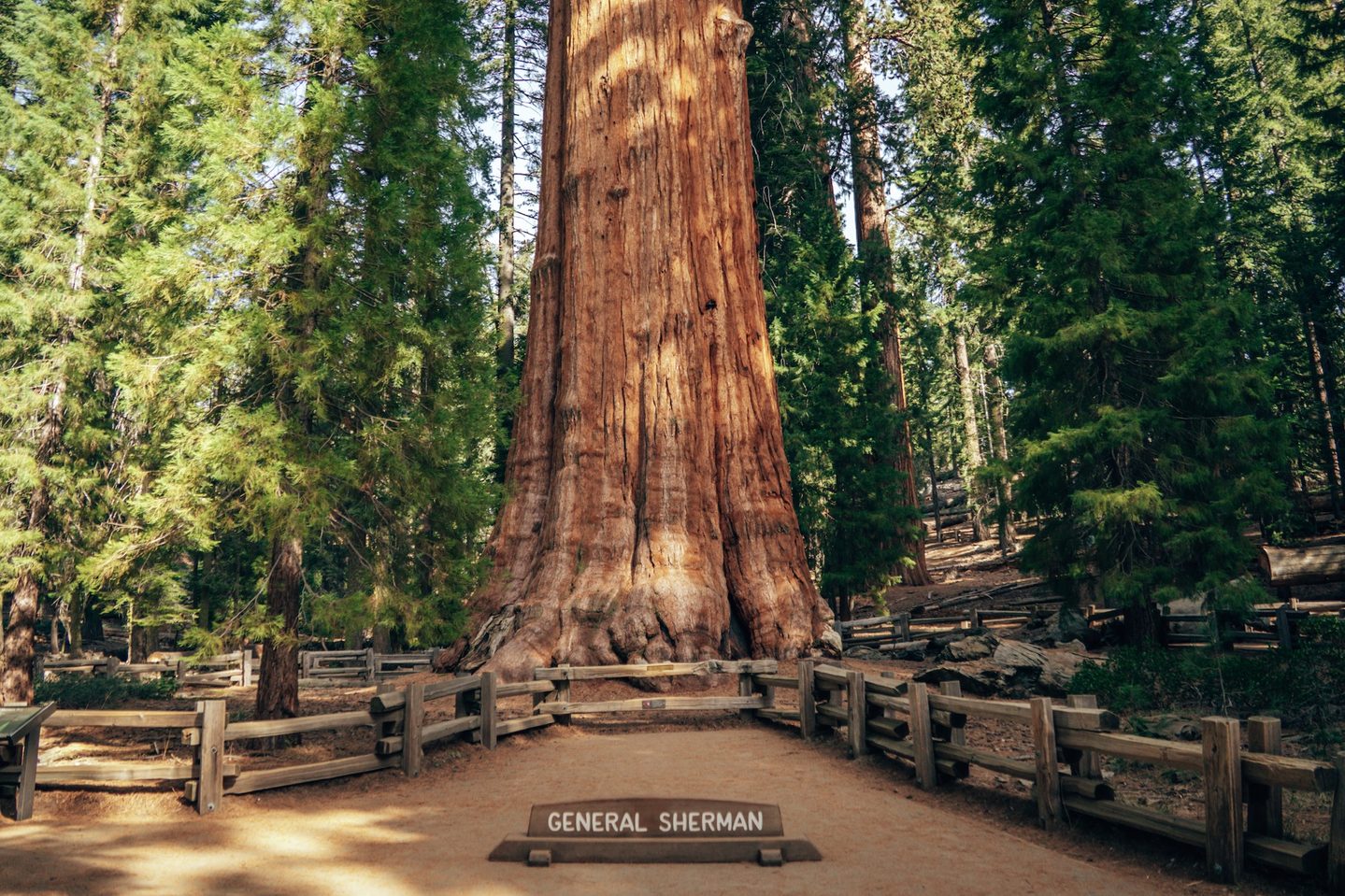
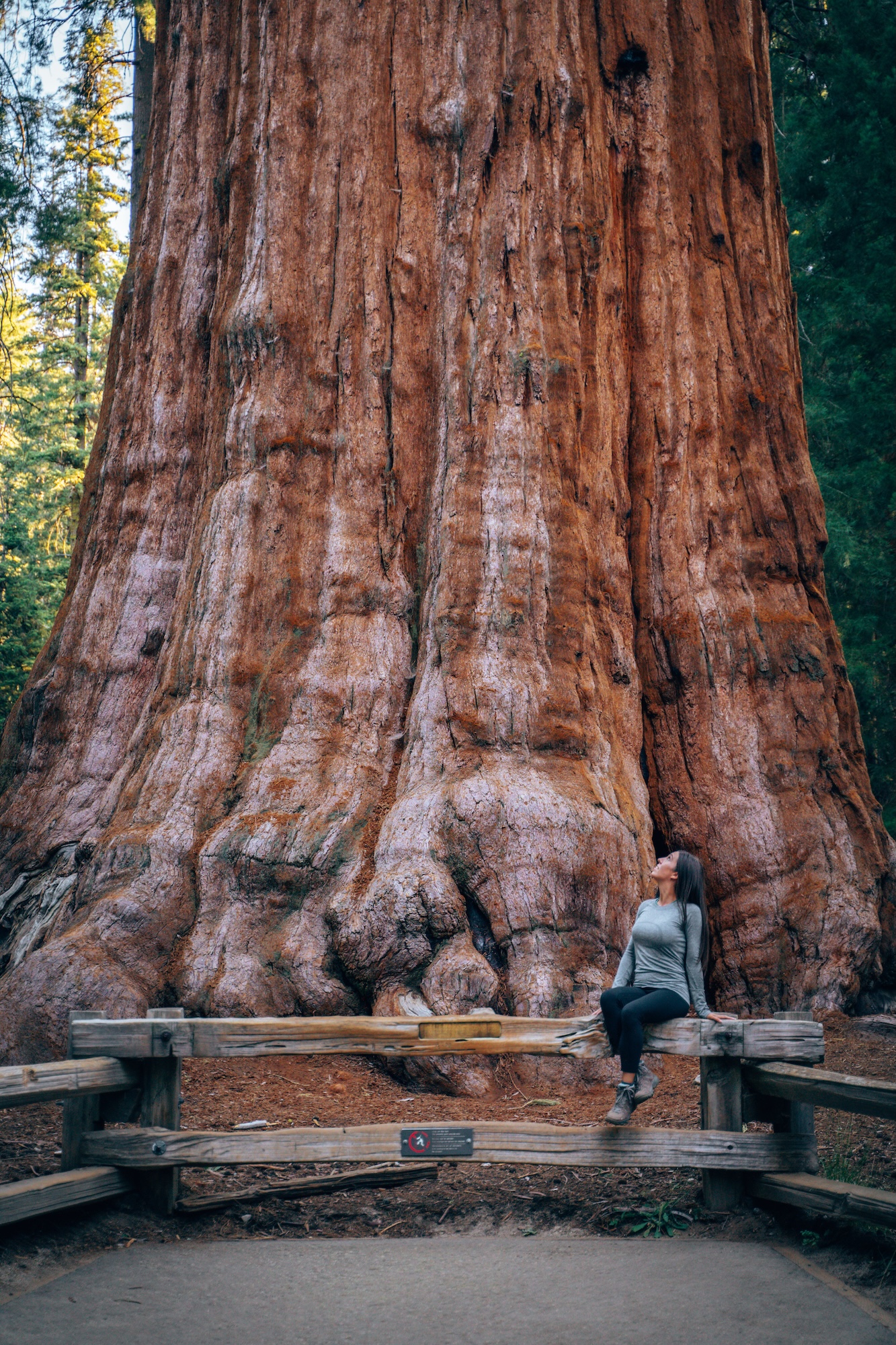
It’s hard to talk about Giant Sequoia Trees without starting with Sequoia National Park. After all, this is where you’ll find some of the most impressive giant sequoia groves in the world, including the General Sherman Tree, the largest tree on Earth by volume. The park protects thousands of these giants, with several groves offering easy access to some truly enormous trees. Whether it’s your first time seeing a giant sequoia or you’ve visited dozens of times, Sequoia National Park is an unforgettable place to experience them.
GIANT FOREST IN SEQUOIA NATIONAL PARK
If you’re visiting Sequoia National Park to see Giant Sequoia Trees, Giant Forest is where you’ll want to spend most of your time. This is the largest unlogged giant sequoia grove in the world, with more exceptionally large trees than any other grove. It’s also home to the famous General Sherman Tree, along with hundreds of other mature sequoias spread throughout the forest. There are several trails to explore, making it easy to spend anywhere from an hour to an entire day wandering among these giants.
GENERAL SHERMAN TREE
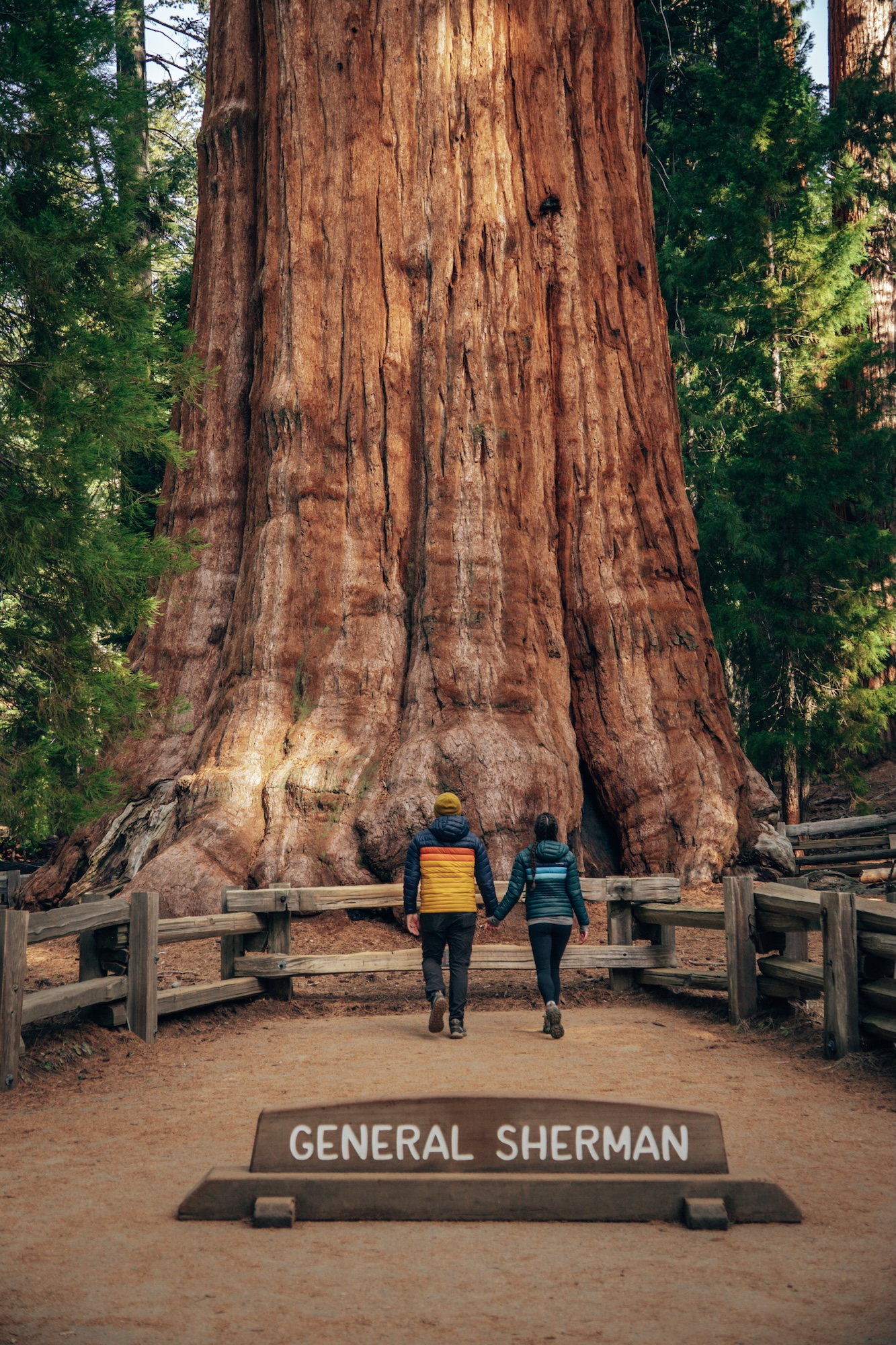
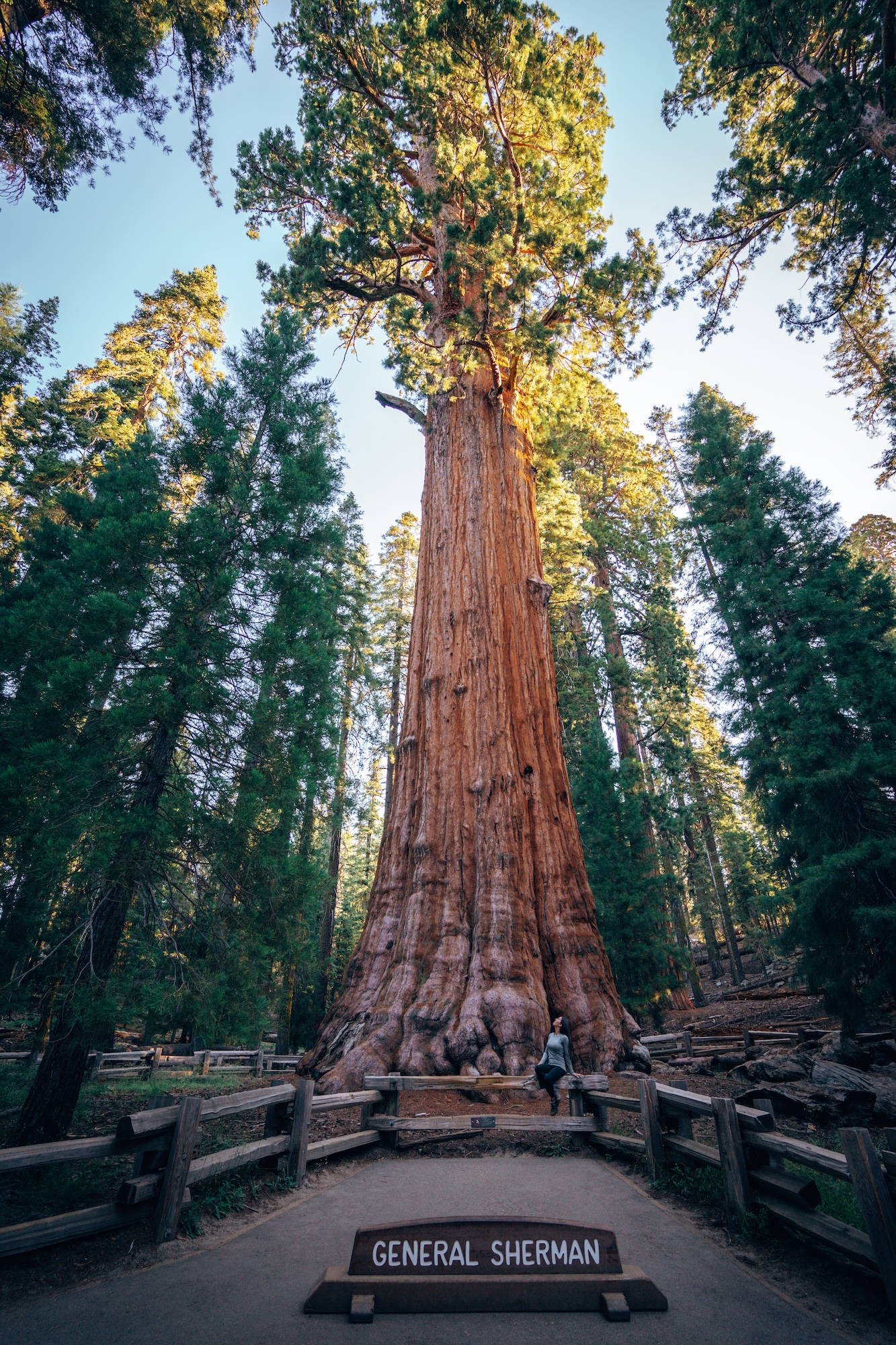
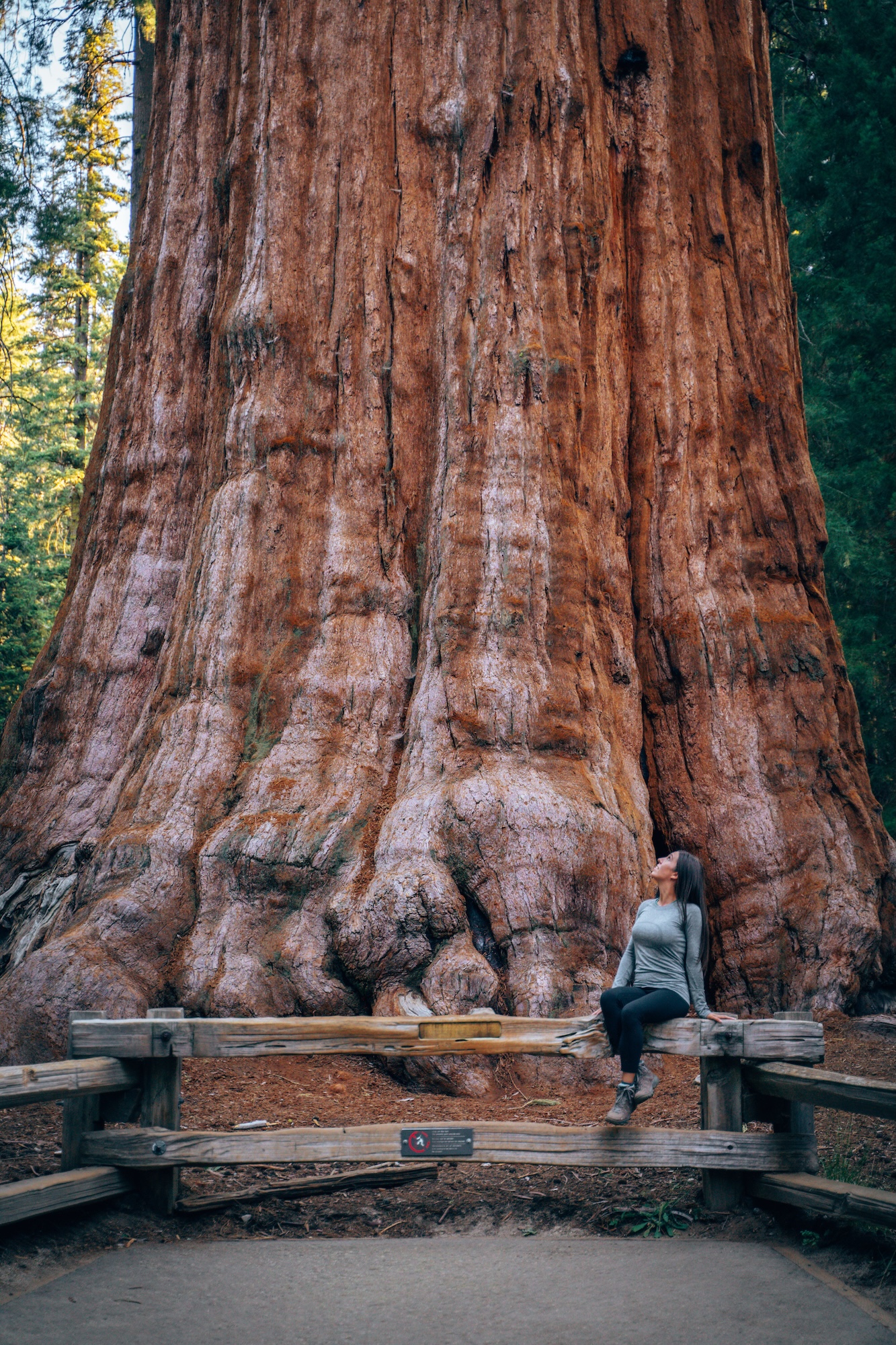
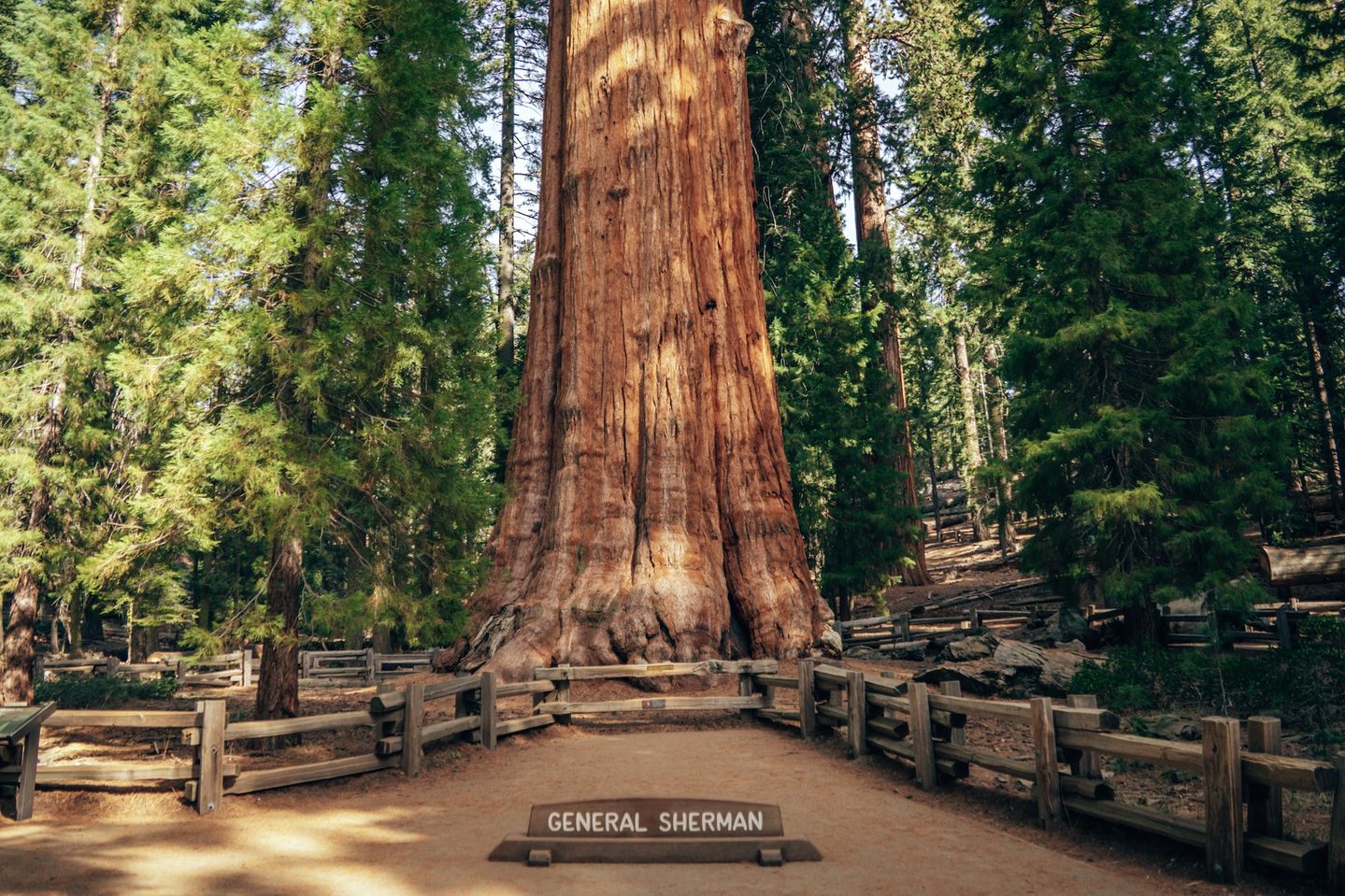
No visit to Giant Forest is complete without seeing the General Sherman Tree. It’s the largest living tree in the world by volume, standing approximately 275 feet tall with a trunk circumference of more than 100 feet at the ground. A paved trail leads about half a mile downhill from the main parking area to the tree, where you’ll get a sense of just how massive these sequoias really are. The walk back is uphill, but there’s also a seasonal shuttle option during certain times of the year.
CONGRESS TRAIL
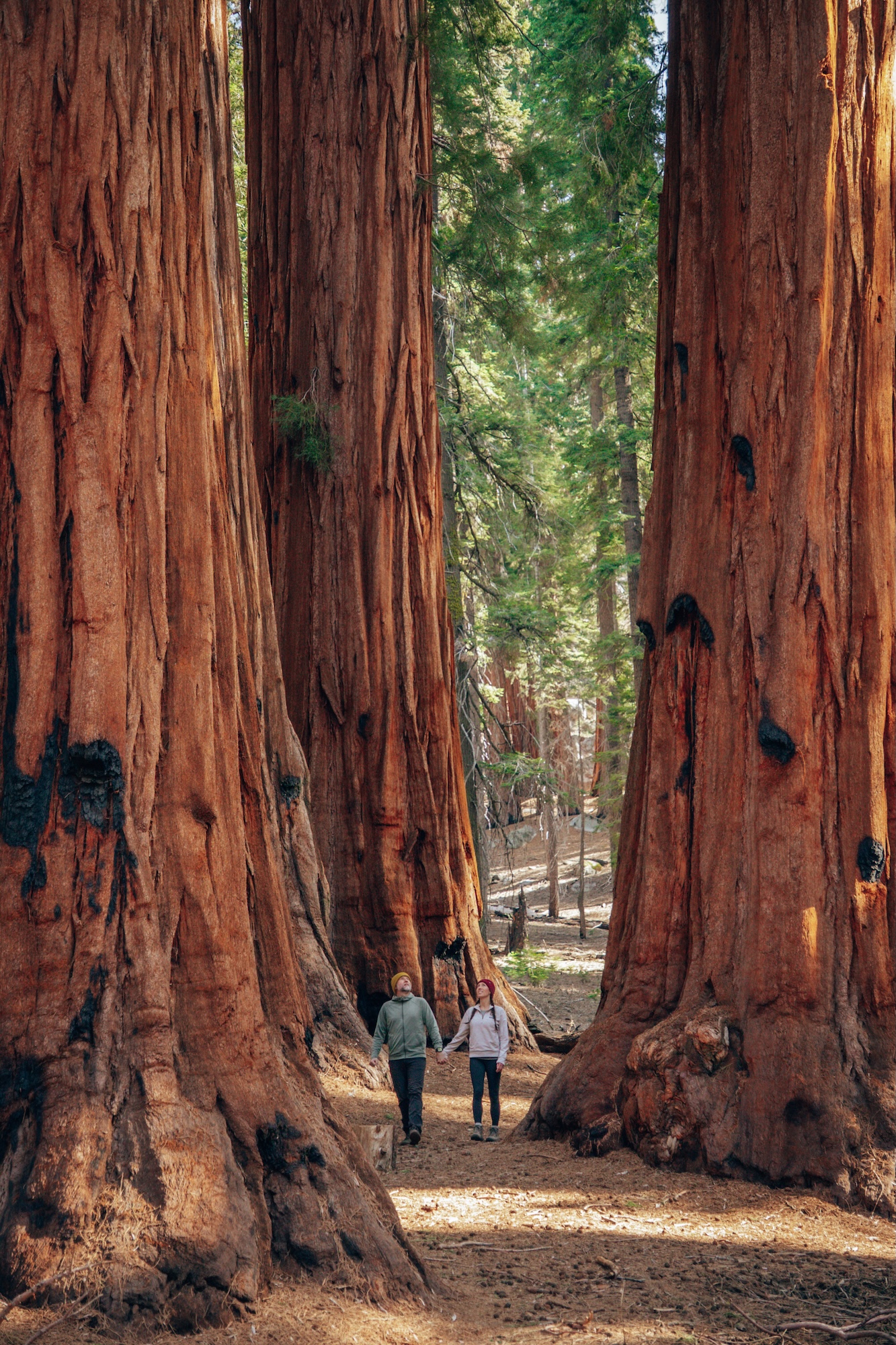
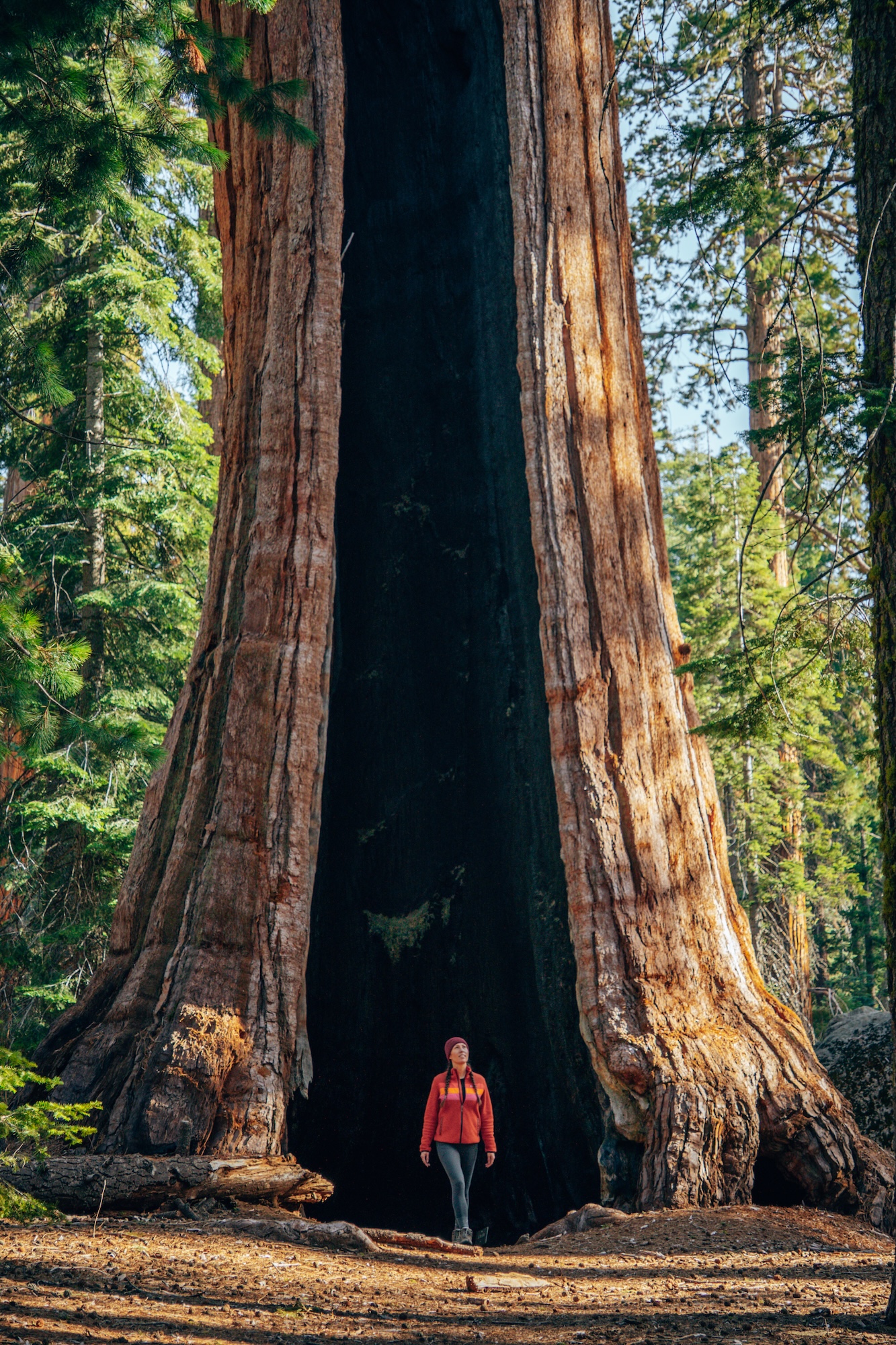
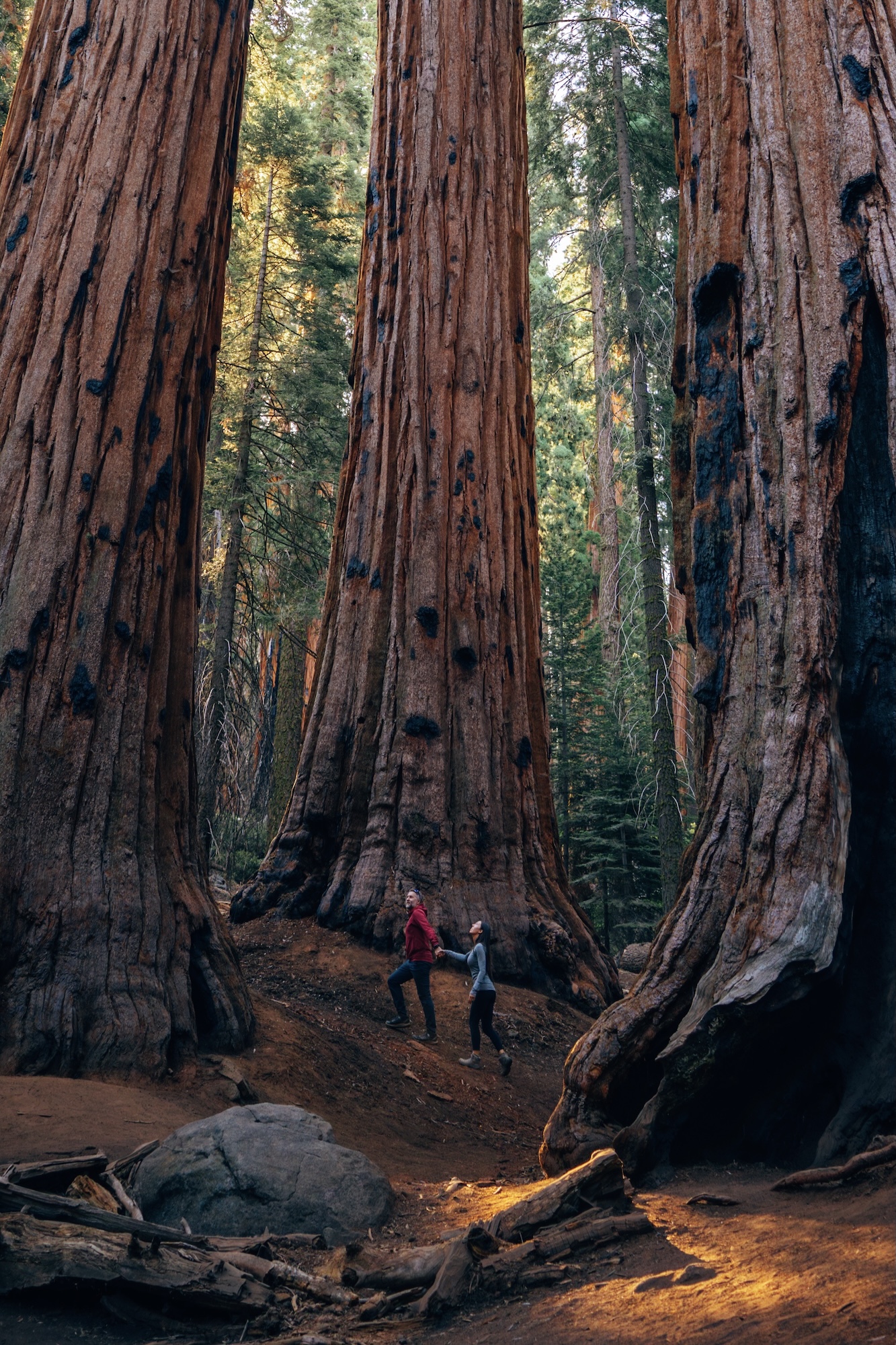
For a chance to see even more giant sequoias, continue onto the Congress Trail near the General Sherman Tree. This 2.7-mile loop winds through the heart of the grove, passing some of the park’s most impressive trees. Along the way, you’ll see notable groups of sequoias known as the House and Senate, as well as the President Tree, one of the largest trees in the world. It’s a great way to spend a little more time among the giants without committing to a particularly long hike.
BIG TREES TRAIL
If you’re looking for a shorter and more relaxed walk, the Big Trees Trail is another great option. This roughly 1.1-mile loop circles Round Meadow, a beautiful open meadow surrounded by towering giant sequoias. The paved trail includes interpretive signs explaining the trees and their natural environment, making it a good option for anyone interested in learning more about these incredible forests. It’s also one of the more accessible walks in Giant Forest, with a relatively gentle route and plenty of opportunities to stop and take in the scenery.
For a quieter experience, head to the Crescent Meadow area, where several trails wind through the surrounding grove. And if you want to learn more about this park, and the best things to do there, check out our other articles:
- ULTIMATE GUIDE TO SEQUOIA NATIONAL PARK
- HOW TO SPEND ONE DAY IN SEQUOIA NATIONAL PARK
- CRYSTAL CAVE IN SEQUOIA NATIONAL PARK: HOW TO PLAN YOUR VISIT
- THREE RIVERS: THE TRUE GATEWAY TO SEQUOIA NATIONAL PARK
KINGS CANYON NATIONAL PARK
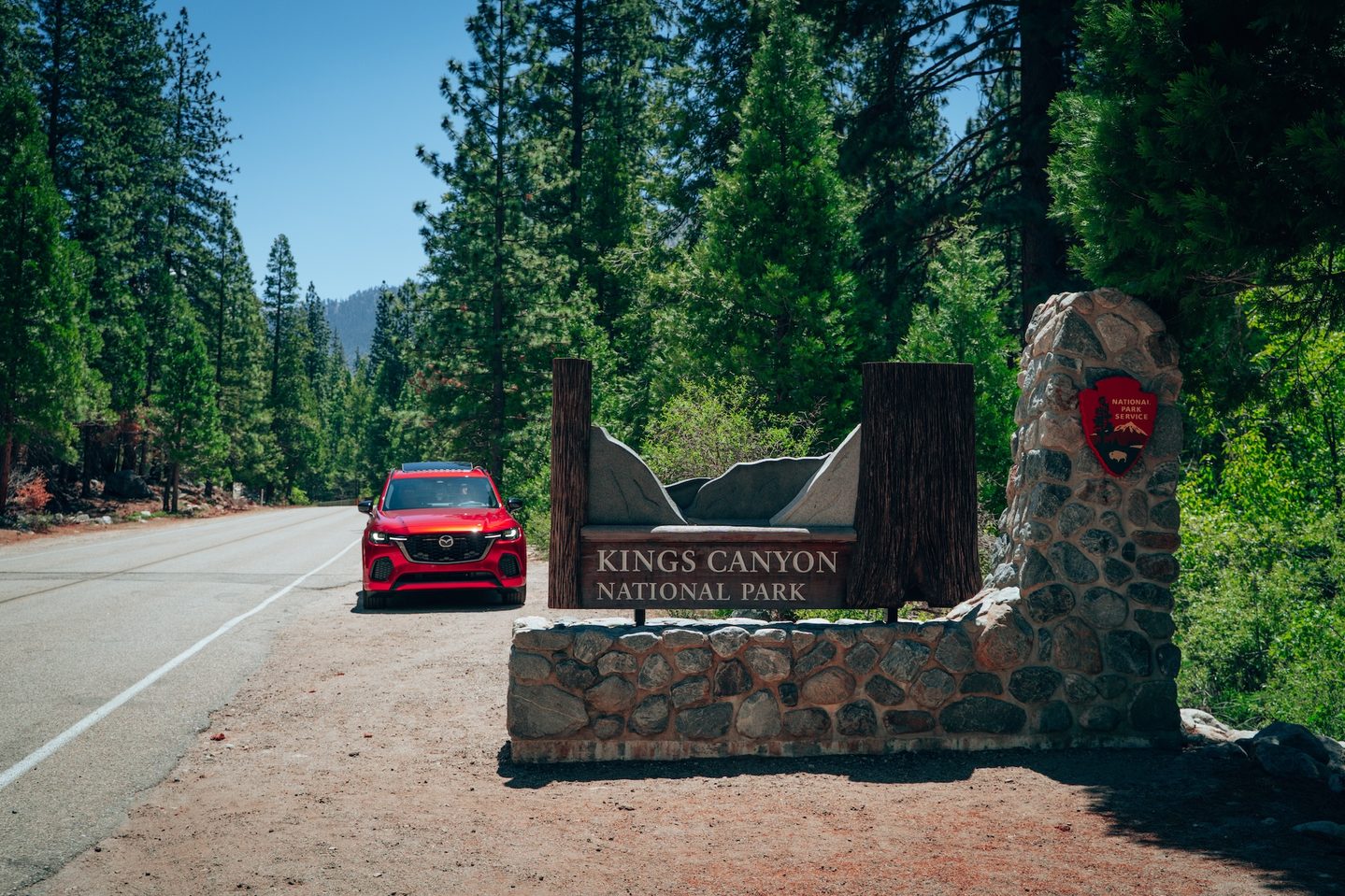
While Sequoia National Park gets much of the attention, Kings Canyon National Park is another fantastic place to see Giant Sequoia Trees. The park is home to Grant Grove, a collection of impressive old-growth sequoias that includes the General Grant Tree, the second-largest tree in the world by volume. In fact, this area was originally protected as its own national park in 1890, specifically to preserve its giant sequoias. Today, it’s one of the easiest places in the Sierra Nevada to get up close to these incredible trees.
GRANT GROVE
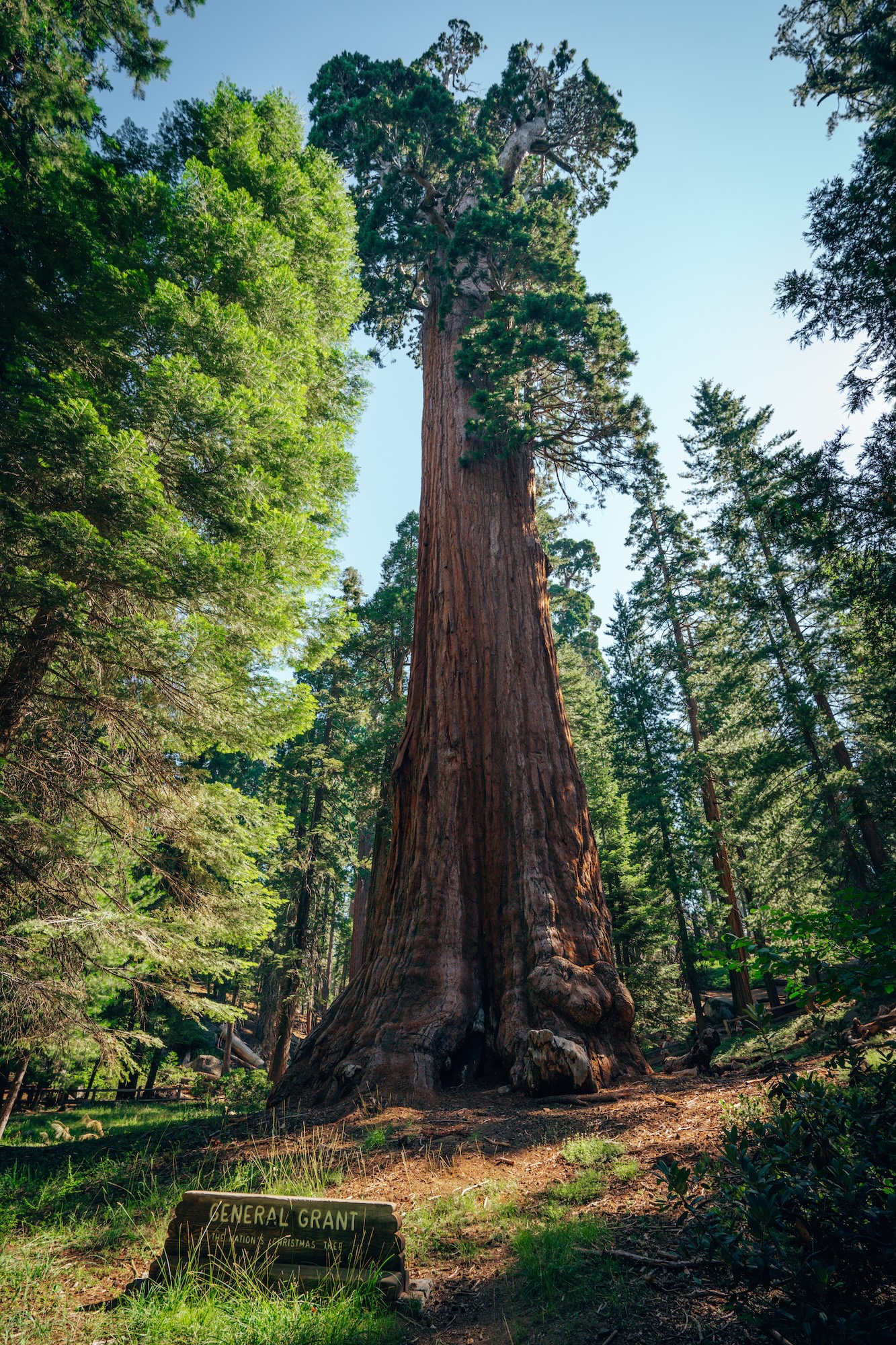
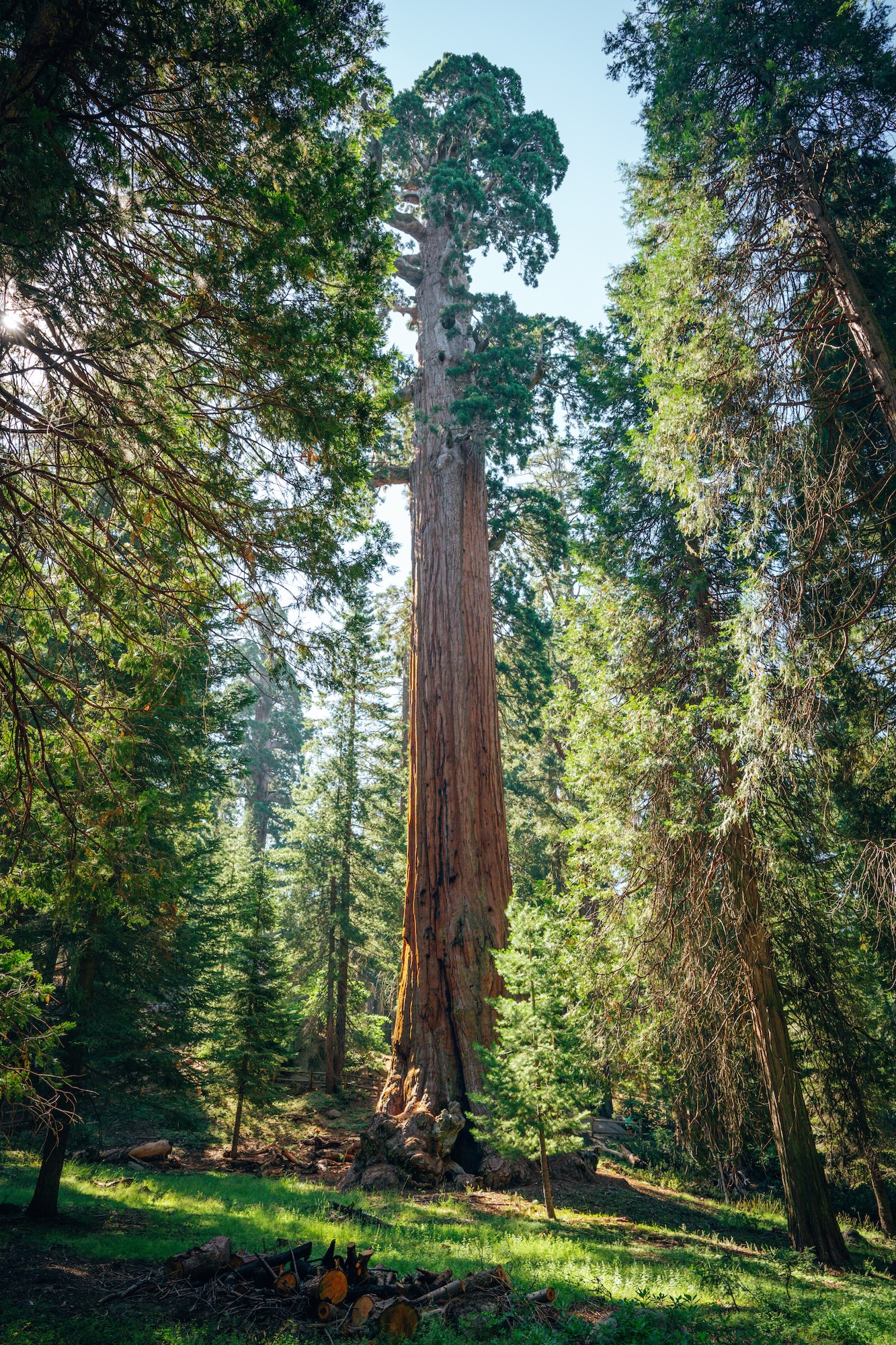
Grant Grove is the main destination for seeing Giant Sequoia Trees in Kings Canyon National Park. It’s home to the General Grant Tree, the second-largest tree in the world by volume and often called the Nation’s Christmas Tree. A short, paved 0.5-mile loop takes you past this impressive giant, along with several other notable sights, including the Fallen Monarch, a hollow sequoia you can walk through. The trail is relatively easy and makes Grant Grove a great stop for anyone who wants to experience some of the park’s most impressive trees without a strenuous hike.
NORTH GROVE LOOP & BIG STUMP
If you have a little more time to explore, there are two other worthwhile stops near Grant Grove. The North Grove Loop is a roughly 1.5-mile trail through a quieter section of the forest, with plenty of giant sequoias, open meadows, and peaceful woodland scenery. For something a little different, the Big Stump Loop takes you past the remains of giant sequoias that were logged before the area received protected status. The most notable is the Mark Twain Stump, where a massive tree was cut down in the late 1800s. Together, these stops offer a different perspective on the park’s sequoias, including both the trees that remain and the history of those that were lost.
Want to learn more about this park, and the best things to do there, check out our other article: HOW TO SPEND ONE DAY IN KINGS CANYON NATIONAL PARK.
YOSEMITE NATIONAL PARK
While Yosemite National Park is best known for its granite cliffs, waterfalls, and incredible mountain scenery, it’s also home to some impressive Giant Sequoia Trees. The park has three separate sequoia groves, with Mariposa Grove being the largest and most popular. Located near Yosemite’s South Entrance, it’s home to hundreds of mature giant sequoias and offers several trails that make it easy to explore the forest. If you’re already planning a trip to Yosemite, it’s well worth setting aside some time to visit these incredible trees.
MARIPOSA GROVE
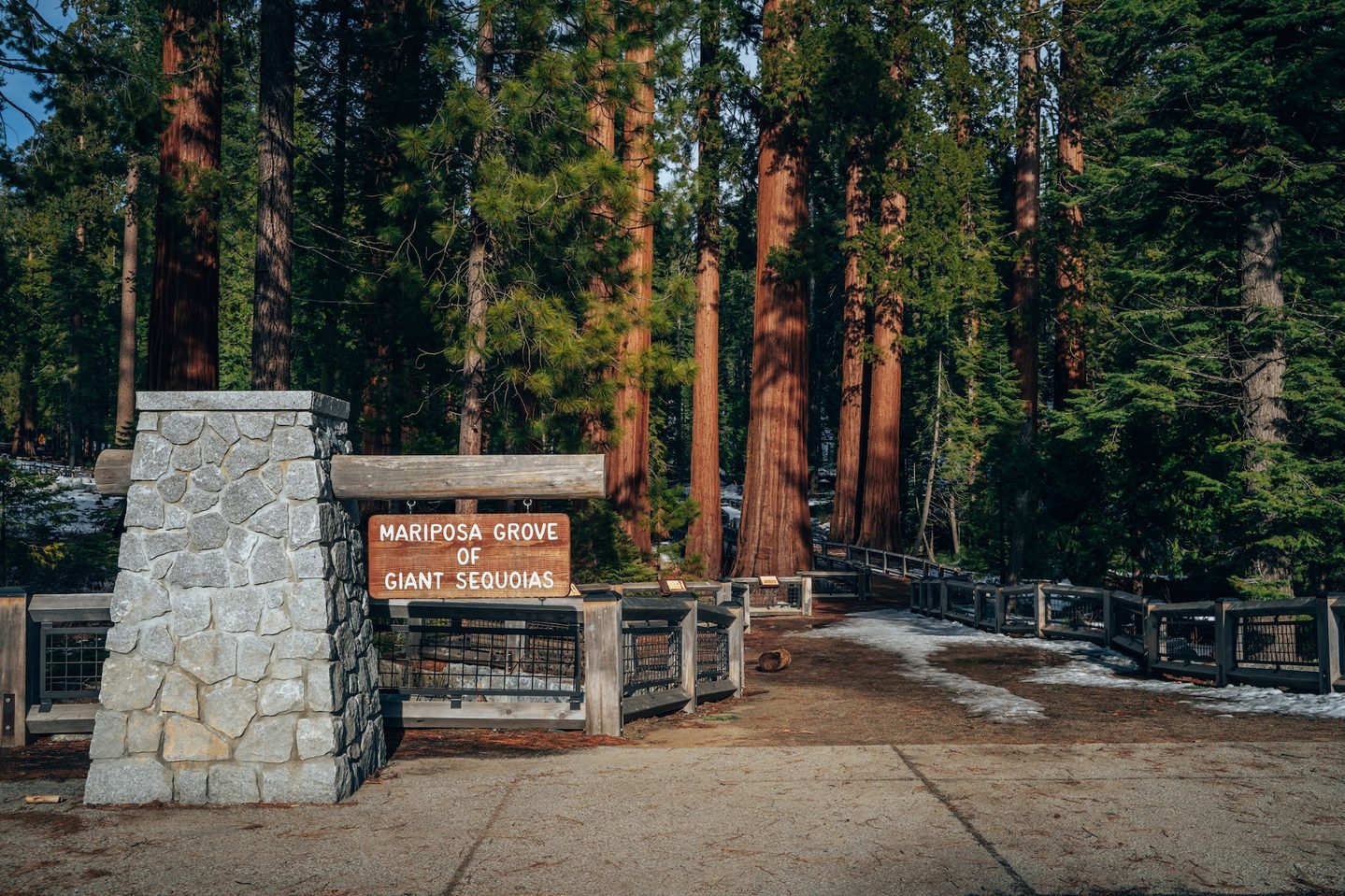
The largest giant sequoia grove in Yosemite National Park, Mariposa Grove has approximately 500 mature trees spread throughout the forest. There are several trails to choose from, ranging from short, accessible walks to longer hikes that venture deeper into the grove. Along the way, you’ll find some of Yosemite’s most famous sequoias, including the Grizzly Giant and California Tunnel Tree. Whether you want a quick introduction to these massive trees or a few hours exploring the forest, Mariposa Grove has plenty to offer.
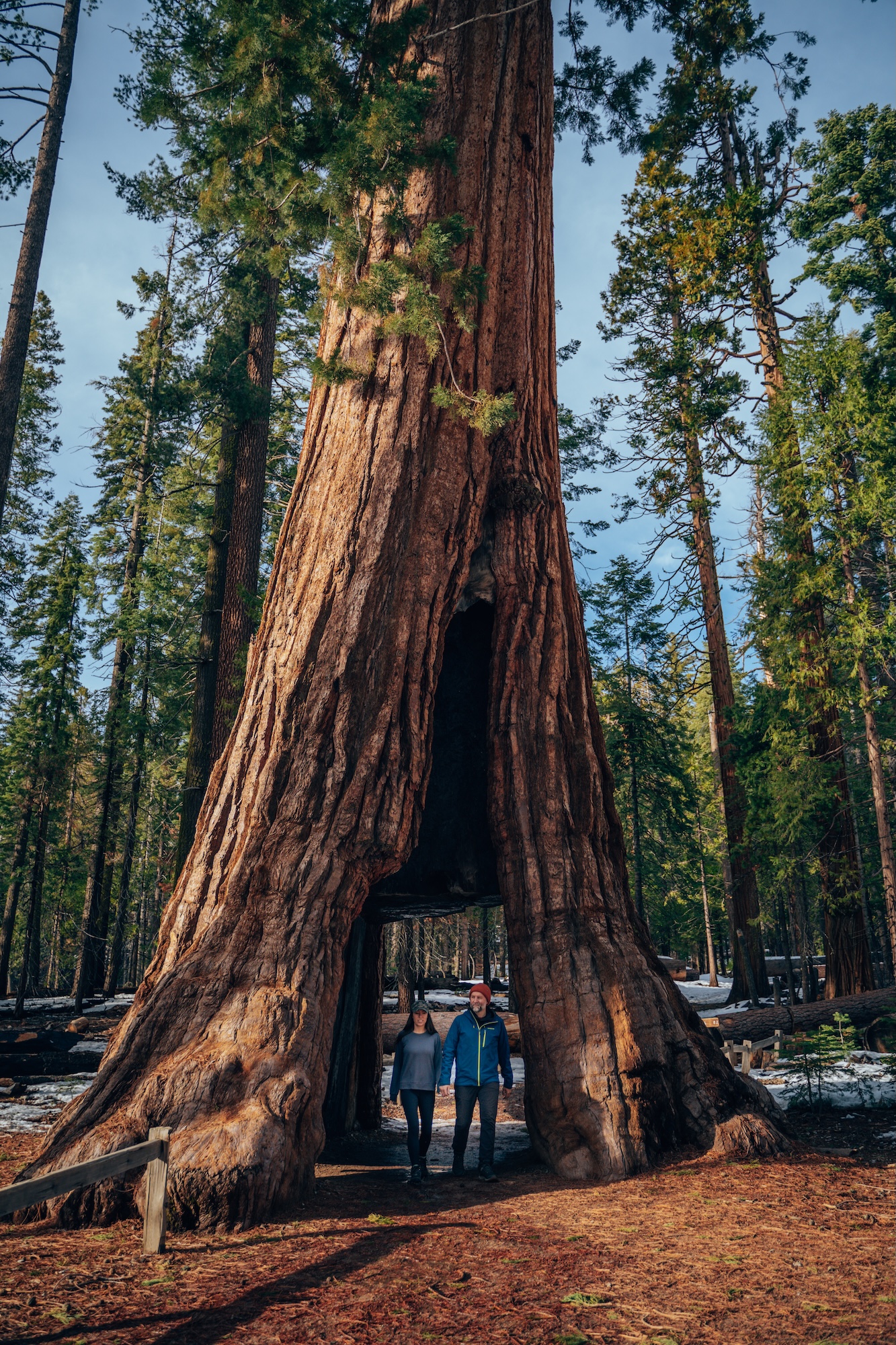
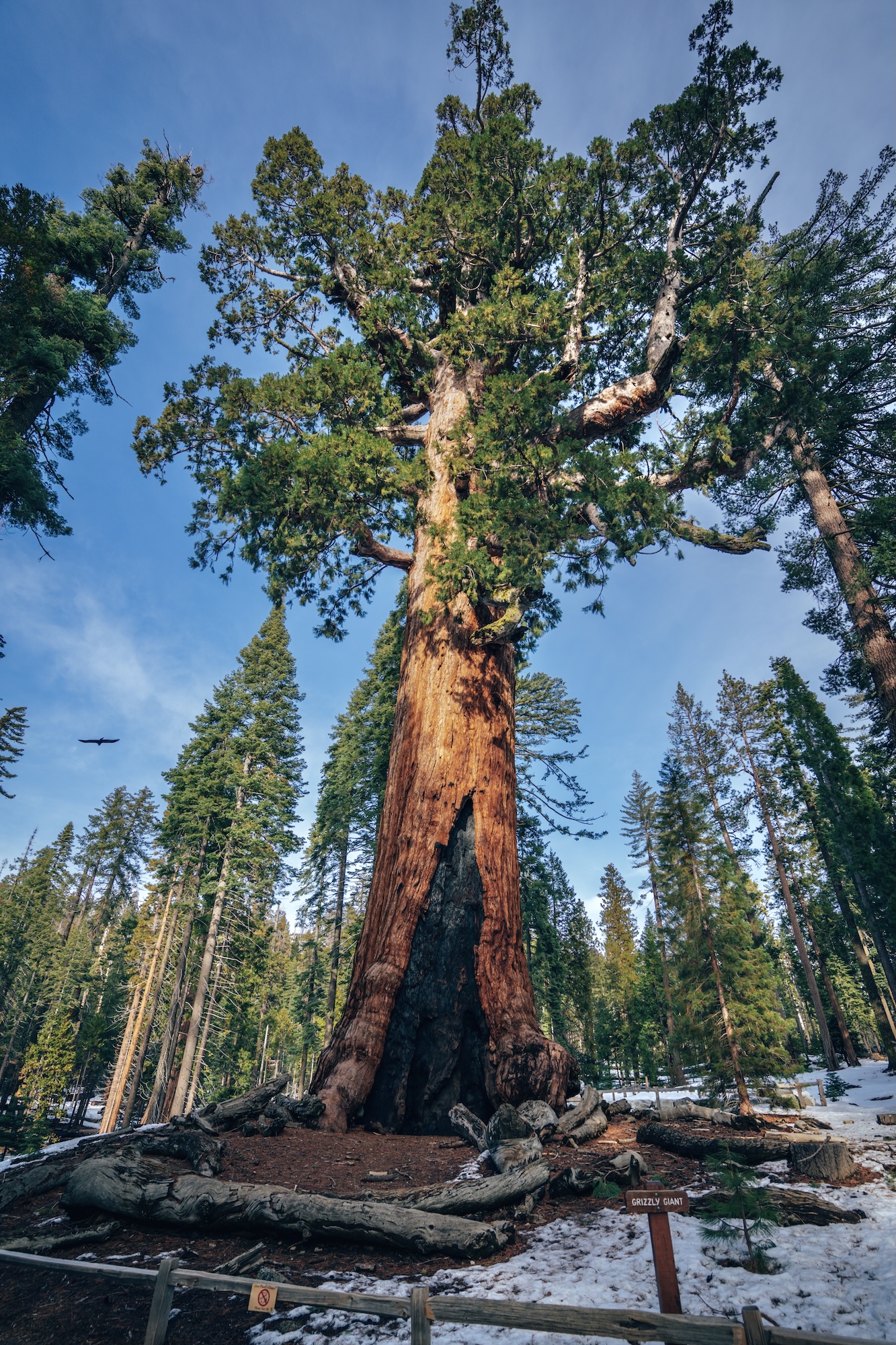
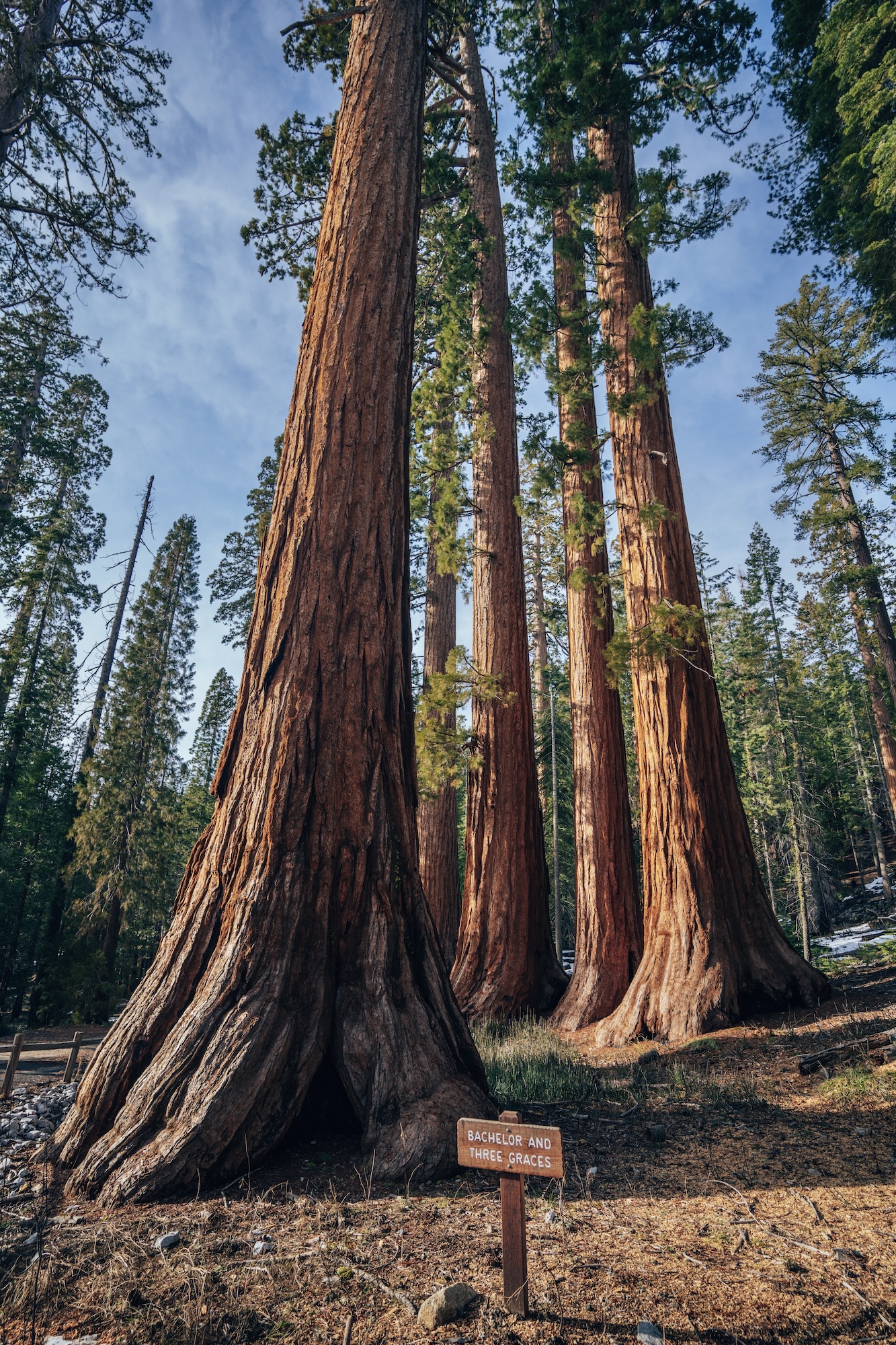
For one of the best experiences in Mariposa Grove, we recommend hiking the Grizzly Giant Loop Trail. This roughly 2-mile loop takes you past several notable sequoias, including the Bachelor and Three Graces, the Grizzly Giant, and the California Tunnel Tree. The Grizzly Giant itself is estimated to be around 3,000 years old, with a massive trunk that makes it one of the most impressive trees in the entire grove. The trail has approximately 300 feet of elevation gain and typically takes 1.5 to 2 hours to complete, making it a great option for getting up close to some of Yosemite’s most iconic giant sequoias.
TUOLOMNE GROVE & MERCED GROVE
Yosemite is also home to two smaller giant sequoia groves near Crane Flat: Tuolumne Grove and Merced Grove. Both offer a quieter alternative to Mariposa Grove, but require a longer hike downhill to reach the trees, followed by an uphill return. They’re worth considering if you’re looking for a less-visited spot to experience Yosemite’s giant sequoias.
Want to learn more about this park, and the best things to do there, check out our other articles:
- ULTIMATE GUIDE TO YOSEMITE NATIONAL PARK CALIFORNIA
- DAY TRIP TO YOSEMITE NATIONAL PARK: YOUR ULTIMATE GUIDE
- 7 SOFT ADVENTURE THINGS TO DO IN YOSEMITE
- YOSEMITE FIREFALL: WHAT TO KNOW BEFORE YOU GO
CALAVERAS BIG TREES STATE PARK
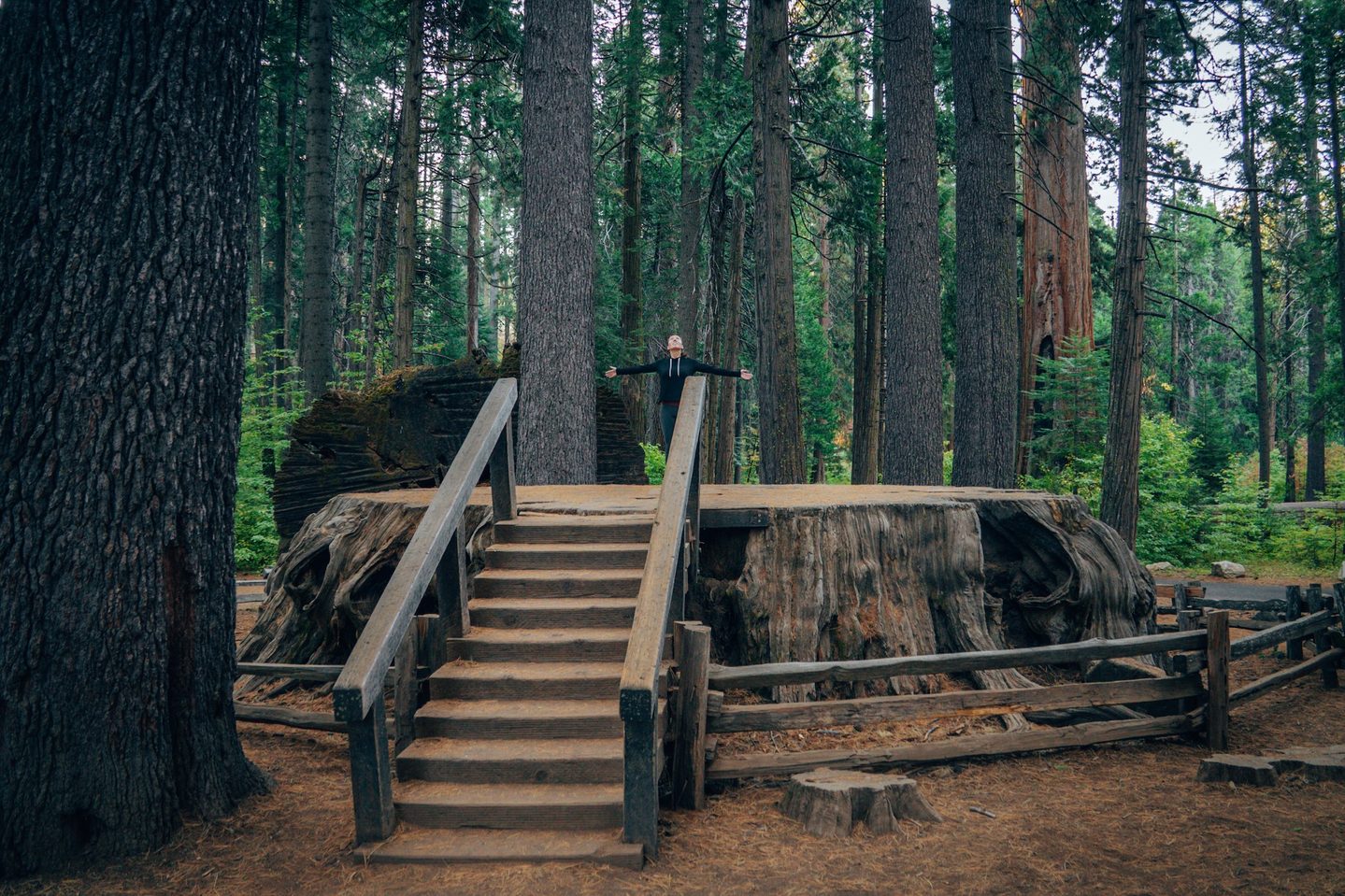
Located in the Sierra Nevada near the town of Arnold, Calaveras Big Trees State Park is one of California’s best places to experience Giant Sequoia Trees. Established in 1931, the park protects two distinct groves of giant sequoias, known as the North Grove and South Grove. It’s also one of the earliest places where these massive trees became widely known, following the discovery of a giant sequoia here in 1852. Today, visitors can explore both groves through a network of hiking trails, with options ranging from easy walks to longer hikes through the forest.
NORTH GROVE
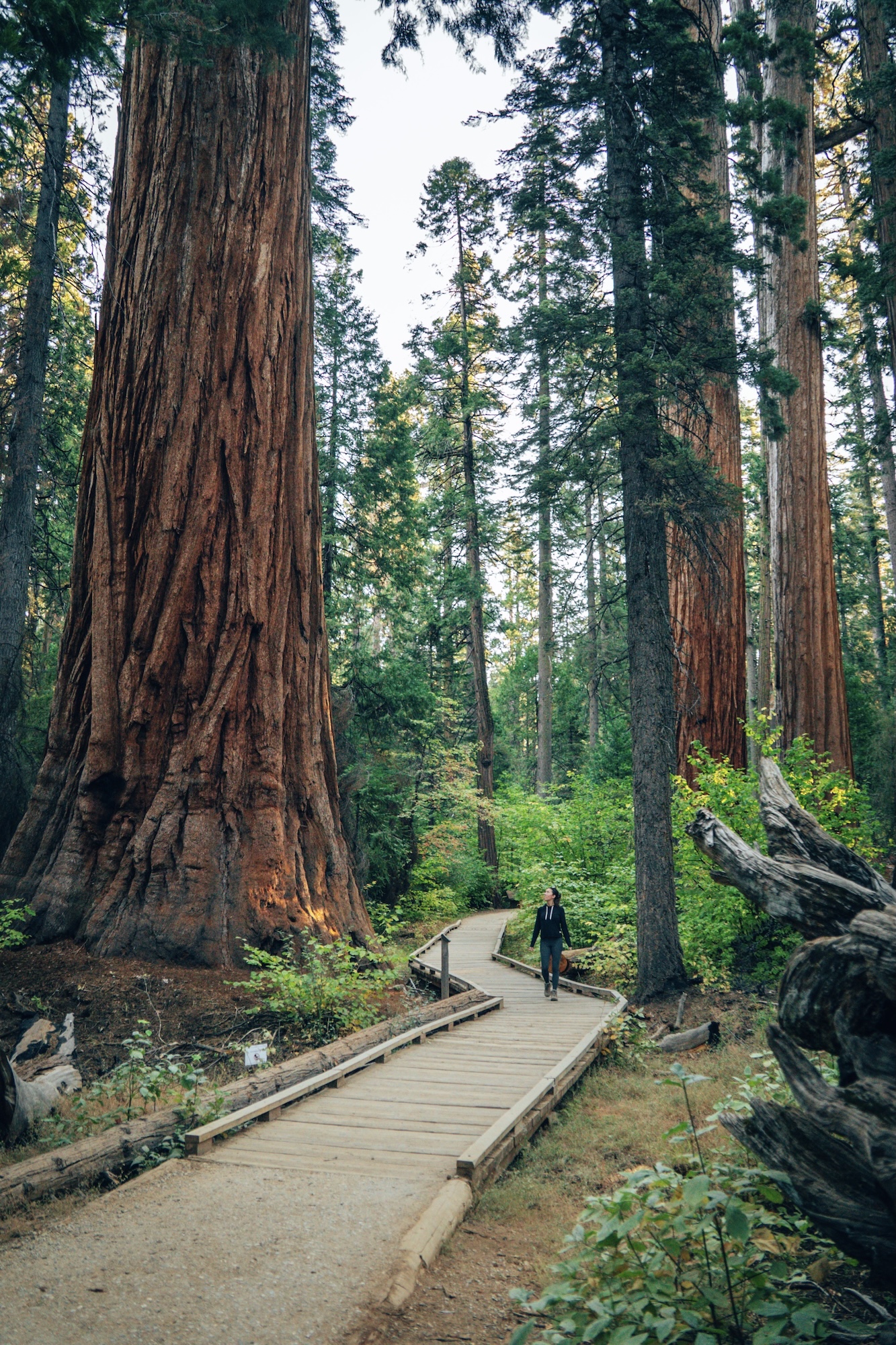
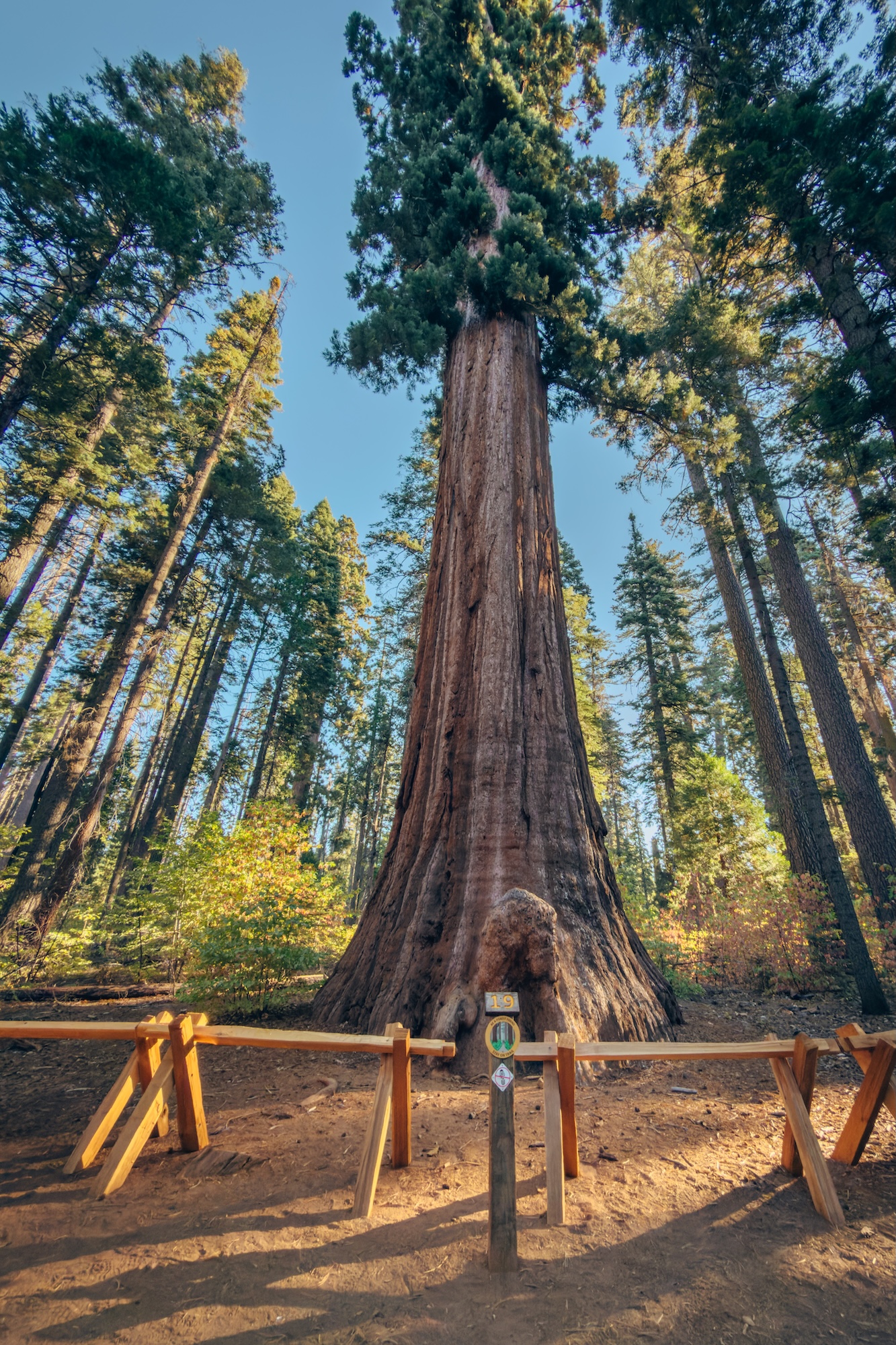
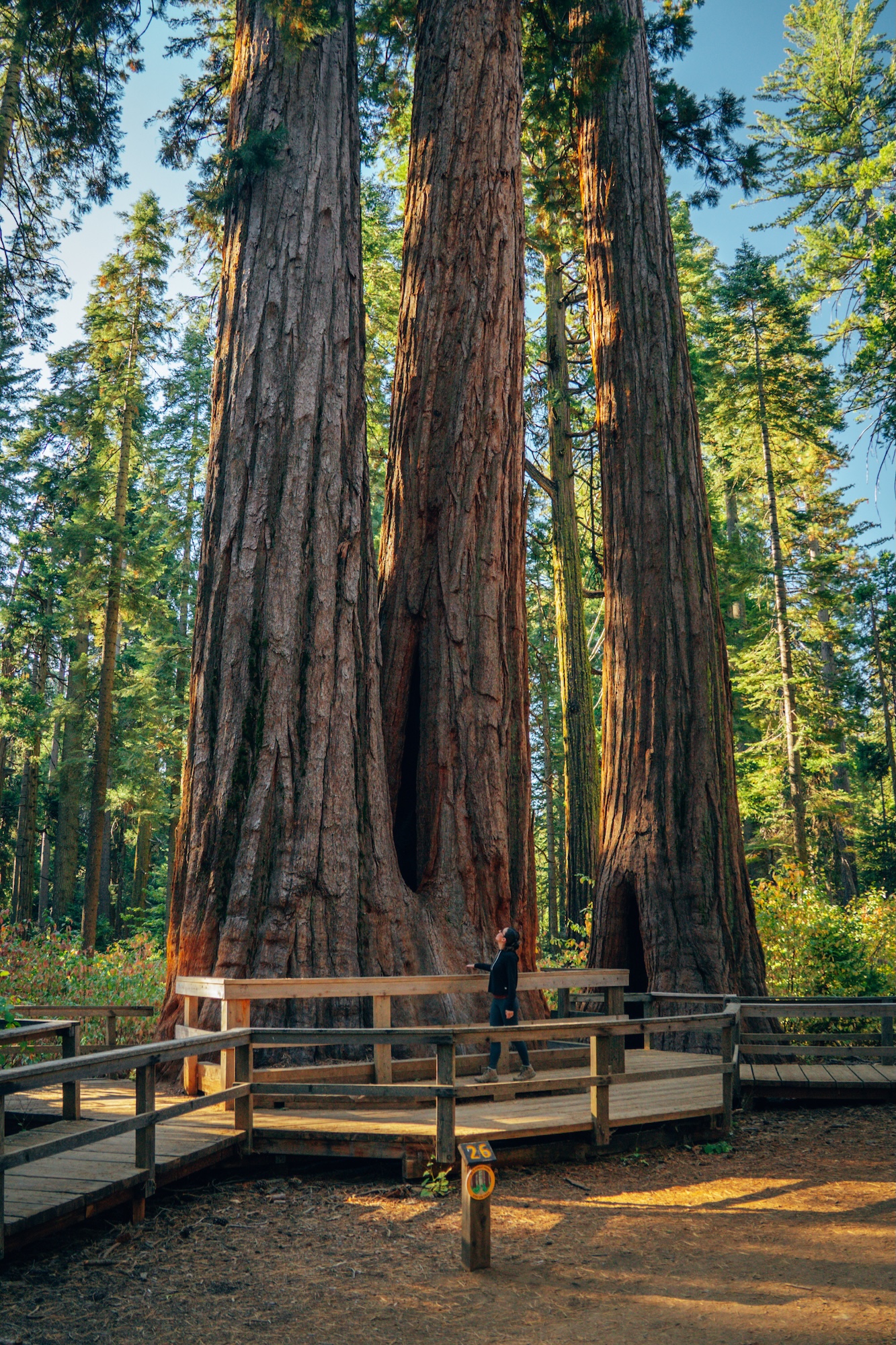
The most popular and accessible area of the park is North Grove, making it a great starting point for your visit. The 1.7-mile loop trail takes you through a beautiful forest of giant sequoias, with numbered markers and interpretive information along the way. You’ll pass several notable trees and landmarks, including the Discovery Stump, where one of the first giant sequoias to gain international attention was cut down in 1853. Other highlights include the Empire State Tree, the largest tree in the North Grove, and the massive fallen trunk known as the Father of the Forest. It’s a relatively gentle walk and a great way to experience the park’s history and impressive trees without committing to a strenuous hike.
SOUTH GROVE
For a quieter experience, head to South Grove, which protects an even larger collection of giant sequoias. The main South Grove Trail is a moderately challenging 5.5-mile loop that takes you deeper into the forest, passing some of the largest trees in the park. One of the biggest highlights is the Agassiz Tree, the largest giant sequoia in Calaveras Big Trees State Park. You’ll also find the Palace Hotel Tree, which has a large fire scar that visitors can walk inside. With fewer visitors and a more remote setting, South Grove is well worth the extra effort if you have the time and energy for a longer hike.
If you’re up for another hike, you can also explore Bradley Grove, a smaller grove of younger giant sequoias accessed from the South Grove area. The 2.5-mile loop offers a different perspective from the park’s old-growth forests and is a nice addition if you have extra time to explore.
SIERRA NATIONAL FOREST
You don’t have to visit one of California’s major national or state parks to experience Giant Sequoia Trees. Sierra National Forest is home to several smaller groves, including one that’s well worth seeking out if you’re exploring the central Sierra Nevada. Located near Shaver Lake, McKinley Grove offers a quieter alternative to some of the more popular sequoia destinations, with an easy walking trail through a beautiful forest setting.
MCKINLEY GROVE
The McKinley Grove is a peaceful collection of mature giant sequoias located along McKinley Grove Road. A short, paved nature trail winds through the grove, passing several impressive trees and interpretive signs along the way. It’s an easy stop for visitors of all ages, with a nearby picnic area making it a nice place to take a break and enjoy the forest. While it doesn’t have the scale of some of California’s more famous groves, McKinley Grove is a worthwhile detour if you’re exploring the area around Shaver Lake.
SEQUOIA NATIONAL FOREST
Not to be confused with Sequoia National Park, Sequoia National Forest protects an extensive stretch of the southern Sierra Nevada, including several giant sequoia groves. One of the most impressive places to experience these trees is within the Giant Sequoia National Monument, which protects some of the largest remaining sequoia groves outside the national parks. Among them is Long Meadow Grove, home to the popular Trail of 100 Giants.
TRAIL OF 100 GIANTS
The Trail of 100 Giants is one of the most accessible ways to experience a large grove of giant sequoias in Sequoia National Forest. The trail winds through Long Meadow Grove, passing hundreds of sequoias, including some estimated to be more than 1,500 years old. The main route is approximately 1.3 miles long, with several loop options and interpretive signs explaining the trees and their environment. It’s a relatively easy walk with plenty of opportunities to get up close to these massive trees, making it a great stop if you’re exploring the southern Sierra Nevada.
WHICH GROVE OF GIANT SEQUOIA TREES SHOULD YOU VISIT?
If you’re trying to decide which giant sequoia grove to visit, it helps to think about where you’re traveling and what kind of experience you’re looking for. While all of these destinations offer something special, here are our recommendations based on location, accessibility, and the overall experience.
IF YOU WANT THE MOST ICONIC GIANT SEQUOIA EXPERIENCE:
Sequoia National Park is the obvious choice. It’s home to the General Sherman Tree, the largest tree in the world by volume, along with the incredible Giant Forest. With several trails winding through some of the most impressive sequoias on the planet, it’s hard to beat this experience.
IF YOU WANT AN EASY, ACCESSIBLE PLACE TO SEE GIANT SEQUOIAS:
Kings Canyon National Park is a great option. The short, paved General Grant Tree Trail takes you right to the General Grant Tree, with several other impressive sights along the way. It’s one of the easiest ways to experience these massive trees without committing to a longer hike.
IF YOU’RE VISITING YOSEMITE NATIONAL PARK:
Mariposa Grove is an easy addition to a Yosemite trip, especially if you’re entering through the South Entrance. The grove is home to hundreds of mature giant sequoias, including the famous Grizzly Giant and California Tunnel Tree. You could easily spend a couple of hours exploring the trails here.
IF YOU’RE EXPLORING THE NORTHERN SIERRA NEVADA:
Calaveras Big Trees State Park is your best bet. Located near Arnold, it’s one of the northernmost major giant sequoia destinations in California and offers two distinct groves to explore. The North Grove is especially convenient, with an easy loop trail through some impressive old-growth trees.
IF YOU WANT A QUIETER GIANT SEQUOIA EXPERIENCE:
McKinley Grove in Sierra National Forest is worth considering. It’s a smaller, less-visited grove with an easy walking trail and a peaceful forest setting. It’s a nice alternative if you’d rather avoid some of the crowds at California’s more popular sequoia destinations.
IF YOU’RE ROAD TRIPPING THROUGH THE SOUTHERN SIERRA NEVADA:
Trail of 100 Giants is an excellent stop. Located in Sequoia National Forest, this easy walking trail takes you through Long Meadow Grove, where you’ll find hundreds of giant sequoias. It’s a fantastic way to experience these trees if you’re exploring the southern Sierra Nevada.
IF YOU WANT TO EXPLORE MORE THAN JUST THE MAIN TRAILS:
The South Grove at Calaveras Big Trees State Park and the Congress Trail in Sequoia National Park are both excellent options. These longer walks take you deeper into the forests, giving you more time to appreciate the scale and beauty of the giant sequoias.
BEST PLACES TO SEE GIANT SEQUOIA TREES IN CALIFORNIA
There’s something pretty special about standing next to a Giant Sequoia Tree and realizing just how long these incredible trees have been around. Whether you visit one of California’s iconic national parks or venture out to a quieter grove in the Sierra Nevada, there are plenty of opportunities to experience them for yourself. Each destination offers something a little different, but they’re all worth adding to your California bucket list. Just remember to take your time, look up, and appreciate these giants. They’re not something you see every day!
CALIFORNIA BUCKET LIST MAP & GUIDE
We’ve spent over 10 years exploring and mapping out this incredible state so that you can spend less time researching, and more time having fun. And we put all the details, info, links, tips and recommendations in to a single California Bucket List Guide. Like GPS location, dog-friendliness, cost, and more. This guide now has over 900 unique locations and things to do around California, with some bonus locations in Oregon and Nevada. So if you’re looking for things to do, or places to go, this guide is for you!
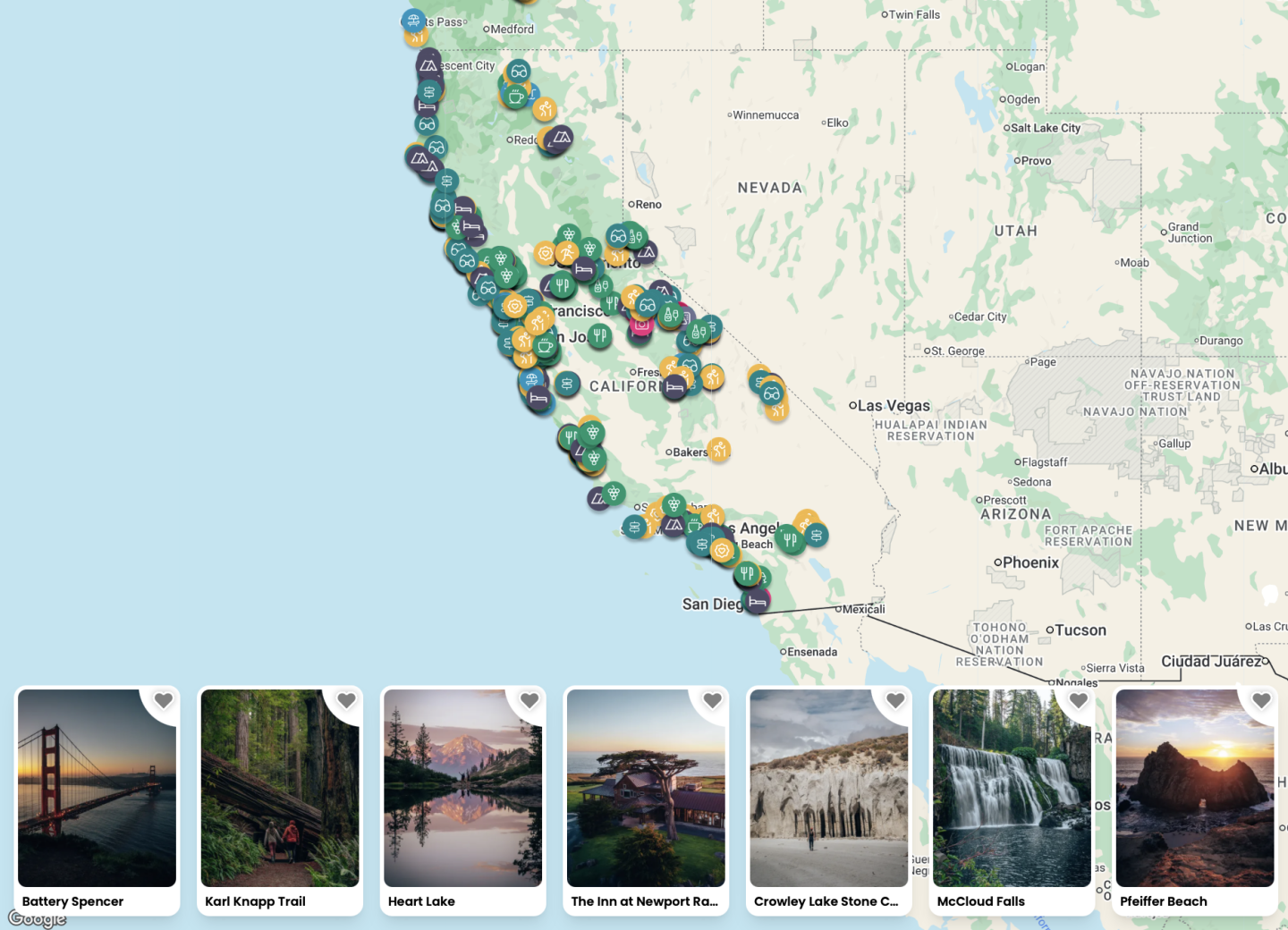
Not much of a planner? No worries! We also have curated itineraries to make the planning process easier for you. And if that isn’t enough, book a call with us or have us create a custom itinerary for you! We are here to help!
Let us know if you have any questions in the comments below. And happy exploring!
- Ryan & Katy
